
Profession Experience

We are introducing a new progression system: villagers now gain experience in their respective professions and improve their skills over time.
Each time a production cycle is completed, the assigned worker earns experience in their current profession. As experience accumulates, efficiency increases. Importantly, experience is profession-specific, working as a lumberjack improves woodcutting skills, but it does not enhance performance as a toolsmith or miner.
Structured Rank System
Experience is represented through a clear rank structure rather than a hidden numerical value. Workers advance through defined profession tiers, making progression visible and meaningful.
All villagers begin as Greenhands, operating at a -30% efficiency penalty. With sufficient experience, they advance through higher ranks such as Apprentice, Artisan and Masters.
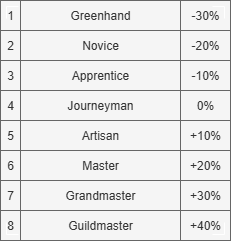
Each rank provides a +10% efficiency bonus, creating a significant performance gap between inexperienced and highly trained workers. This structured system ensures that workforce development becomes a strategic consideration rather than a passive background mechanic.
Worker Personalities
When a villager reaches the Journeyman rank for the first time, their formal training is considered complete. At this point, they unlock a Worker Personality, adding further specialization beyond raw efficiency.
Currently, three personalities are implemented:
- Maker -> Grants an additional efficiency bonus
- Socialiser -> Increases the morale of colleagues
- Innovator -> Generates science with each production cycle
Personality availability depends on underlying character traits. For example, unlocking the Innovator personality requires traits such as Intelligent or Fast Learner. This creates a meaningful connection between innate characteristics and professional development.
Family Experience and Generational Knowledge
Reaching certain ranks activates family-level bonuses. For instance, a hunter who achieves the rank of Artisan provides a profession bonus to the household, allowing other family members to begin at the Novice level in hunting.
This system reflects generational knowledge transfer and supports long-term strategic planning. Skilled families gradually establish advantages in specific professions, reinforcing specialization across generations.
Labor Market Prioritization
As villagers gain experience and improve their efficiency, their value in the labor market increases. Workplaces now prioritize workers based on:
- Efficiency
- Experience
- Social contribution
With this system, professional growth, specialization, and long-term planning become central components of settlement development. Villagers are no longer static production units, they evolve over time, shaping both their families and the broader economy.